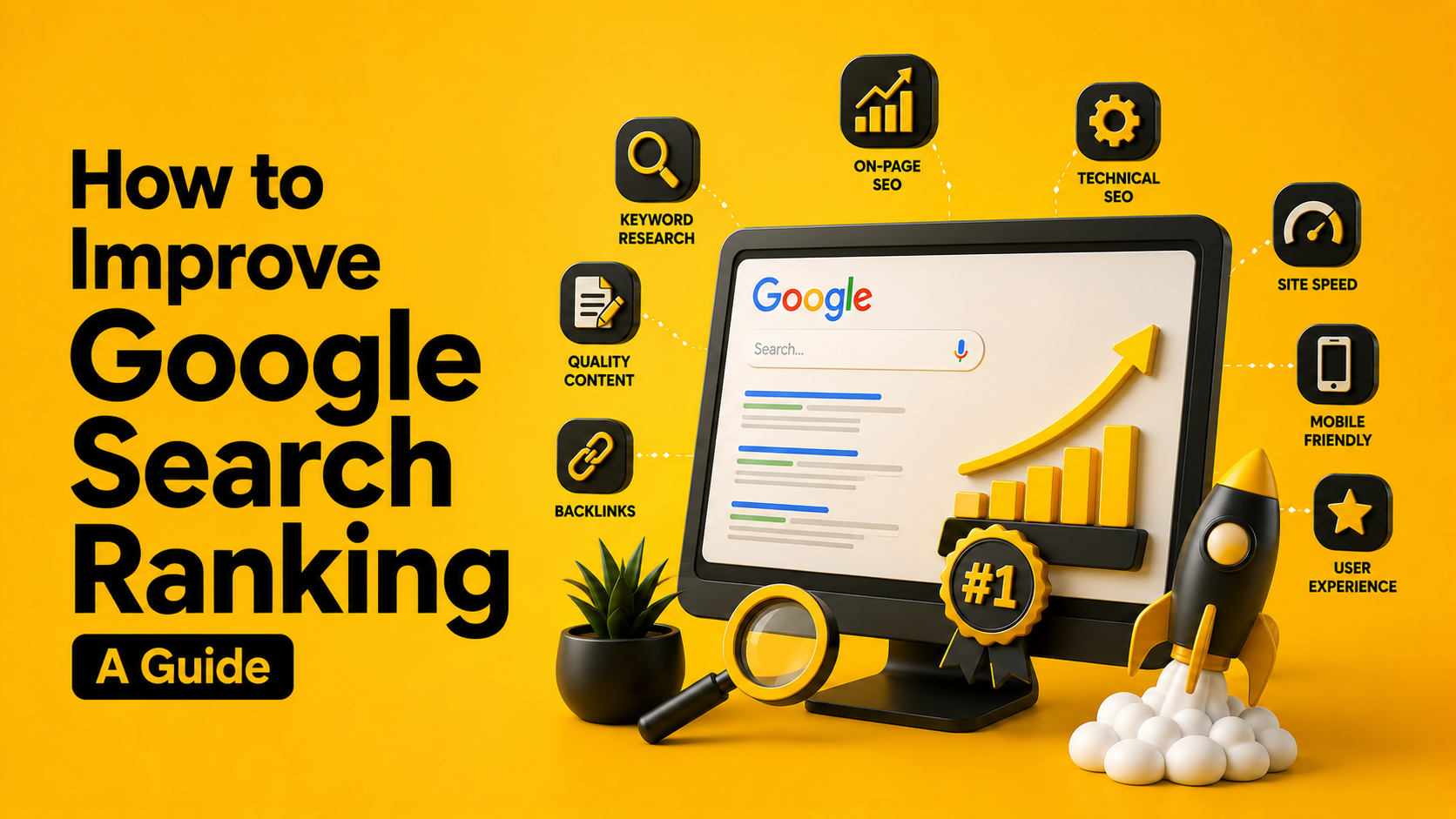
Your blog post is out there, you’ve optimized your blog with some keywords, and you’ve checked Google at least three times already, but for some reason, your competitor from last year is beating your fresh blog post.
Sounds familiar?
This is a common scenario for businesses, marketers, and SEO experts alike. Who doesn’t want a better search ranking on Google?
Well, most companies don’t know that the tactics they’re using for search engine optimization haven’t worked for years. They focus on old SEO practices that have been abandoned by Google years ago.
Keyword stuffing, buying backlinks for any price, and creating thin content are no longer ways to achieve higher rankings on Google.
The problem?
In today’s world, search is all about helping the user solve their problem. This means that you should take into account user experience, search intent, website authority, and content quality.
The good news?
If you understand the ranking factors of today’s search algorithms, you will be able to create an effective SEO strategy.
In this guide, you will learn how to rank on Google, how the Google search algorithm works, and how to increase your rankings without relying on SEO tricks.
Understanding How Google Search Ranking Works
Now that we have discussed the problem, let us understand the game first.
The vision of Google is very clear. We will provide the most relevant and helpful response to any query that comes through the system.
For every search made by anyone, Google’s algorithm looks at all the billion pages and decides who gets the top positions.
How does Google make such decisions? By looking at a variety of signals, such as:
- Content relevance
- Search intent alignment
- Page quality
- Website authority
- User experience
- Backlinks
- Technical SEO
- Mobile usability
- Content freshness
And these signals together form the core elements of modern-day Google search ranking factors. You can imagine Google to be an extremely honest judge who does not care how hard you have worked on the content you have created.
Why Search Intent Is More Important Than Keywords
Companies commit the same mistakes time and again:
They get caught up in keywords but ignore the intent behind searches.
If people type in “Best CRM software for small businesses”
Do they need:
- What is CRM?
- History of CRM?
- Software recommendations?
Obviously, they just want software solutions.
If your page provides a 2,000-word guide on what CRM is, Google will not show your site on top because it fails to satisfy search intent.
Getting familiar with search intent may be one of the quickest ways to raise rankings.
Normally, there are four main types of search intents:
Informational
The users want information.
Example:
How to improve Google search ranking
Commercial
The users are comparing their choices.
Example:
Best SEO agencies in the USA
Transactional
The users are prepared to take action.
Example:
Hire an SEO company
Navigational
The users are looking for a specific website.
Example:
Xparro Digital
When writing your content, think about the following question:
“What do the users want?”
The closer your content aligns with that answer, the better your ranking potential.
15 Proven SEO Strategies for Higher Rankings
1. Target Long-Tail Keywords Instead of Fighting Giants
One of the best methods you could apply to increase your rankings would be to use long-tail keywords.
Long-tail keywords are longer search phrases with less competition.
Like this:
Instead of SEO
Do this:
- SEO services for law firms
- SEO agency for SaaS startups
- How to improve Google search ranking for local businesses
Why does it work?
Because:
- Competition is lower
- Search intent is clearer
- Conversion rates are higher
- Ranking opportunities are greater
There are many cases when companies spend years fighting impossible keywords, losing many other good keyword chances.
2. Put Your Primary Keyword in Strategic Locations
Keyword placement is still important. Not because Google requires any help in comprehending language. It’s just that it increases relevance.
Primary keywords should appear naturally within:
Title Tag
For example, How to Improve Google Search Ranking: 15 SEO Tips
First 200 Words
Google focuses on early text. So mention your targeted keyword naturally in the intro.
H1 Headline
Primary keywords should feature in your H1 tag.
Sub-headlines
Use variations in your article.
URL
For example, yourwebsite.com/how-to-improve-google-search-ranking
Meta Description
Again, add the keyword naturally and attractively.
The idea is not to repeat. It is to make your intent clear.
3. Create Better Content Than Everyone Else
That should be clear. But not many sites do that. Google does not value content simply because it is there. The ranking algorithm values the best response.
When writing anything online:
Identify your top competing pages.
Create a comparison sheet like:
| Ranking Factor | Competitor A | Competitor B | Your Content |
| Word Count | |||
| Images | |||
| Videos | |||
| Statistics | |||
| FAQs | |||
| Internal Links | |||
| Case Studies |
Identify the gaps. Then fill them with better content.
Not necessarily longer content. Not longer. Better. There’s a difference.
4. Focus on User Experience (Because Google Does)
Think about how you feel when you click on an article and get:
- Slow loading pages
- Annoying popups
- Tiny fonts
- Broken layouts
What would you do?
Google sees it. User experience influences ranking.
Optimize:
Page speed
People expect fast-loading pages.
Mobile optimization
More and more searches take place on smartphones.
Readability
Use:
- Short paragraphs
- Clear headings
- White space
- Bullet points
- Navigation
Make it easy for users to find what they need.
5. Earn High-Quality Backlinks
Backlinks are still one of the most influential ranking factors of Google search.
A backlink is just a link from other sites to your site. It is like an endorsement. The better sites that endorse you, the more you can be trusted by Google.
However, quality is better than quantity.
A single backlink from an authoritative industry site beats a hundred spam backlinks.
Build your backlinks by targeting:
- Industry blogs
- News websites
- Resource pages
- Research reports
- Guest posting opportunities
Keep in mind:
Google favors earned backlinks, not artificial backlinks.
6. Publish Original Data and Statistics
Need backlinks naturally? Be the source. Everyone loves to cite unique stats.
For instance:
Instead of just writing another SEO trends article,
- Survey the industry.
- Analyze the data.
- Publish your research.
- Write benchmarking reports.
The writers will use your stats and link to them.
This tactic will bring you:
- Backlinks
- Brand authority
- Organic traffic
- Industry recognition
All at once.
7. Add Videos to Increase Engagement
This is another SEO strategy that is often overlooked:
Use video content.
Videos can help you boost:
- Dwell time
- User engagement
- Content consumption
In most cases, people who spend more time on your page find the content valuable.
For instance:
If you are writing about:
- SEO auditing
- Keyword research
- Google Analytics
- Building links
A short video explaining the topic will add value to your content. Besides, some people just like watching rather than reading. Why not accommodate them?
8. Optimize for Featured Snippets
Featured snippets are the answer boxes provided by Google. They appear above normal search results. Getting one of those can hugely boost visibility.
So how do you boost your chances?
Answer questions directly.
Use:
- What is…
- How to…
- Why does…
- Benefits of…
Keep answers concise and structured. Google loves clarity.
9. Strengthen Internal Linking
Internal links assist in understanding the site structure for Google. They also help in spreading authority around the site.
As an example:
In case there are:
- SEO blogs
- PPC blogs
- Content marketing blogs
Connect them effectively.
This will result in:
- Better crawling
- Higher engagement
- Increased page authority
- Improved user experience
All pages need to be connected logically.
10. Improve Content Freshness
Google likes to have updated information. However, it does not necessarily mean that new content is always required. Updating the content is sometimes more effective than creating new content.
Update the following:
- Statistics
- Examples
- Screenshots
- Industry trends
- Broken links
An updated article can easily beat the competitors.
11. Build Topical Authority
Google loves expertise. Don’t generate content randomly; form topical hubs.
For instance:
Suppose your key topic is SEO:
Write articles covering:
- Keyword research
- Link building
- Technical SEO
- Local SEO
- Content optimization
- SEO audits
This shows expertise in Google’s eyes. The outcome? Better rankings from multiple keywords.
12. Optimize for Core Web Vitals
Core Web Vitals define page experience.
Google checks:
Loading Efficiency
How fast does the content load?
Interactivity
How quickly can the user interact?
Visual stability
Do things move around unexpectedly on the page?
Improvement of the above may lead to better rankings and more conversions since no one likes to click a button that all of a sudden moves three inches to the left.
13. Use Schema Markup
Schema Markup will help Google comprehend your content. Imagine giving additional information to it.
Types of schemas include:
- FAQ schema
- Article schema
- Review schema
- Organization schema
- Local business schema
Using schema markup appropriately will help you get more clicks and traffic.
14. Optimize Click-Through Rates
Rankings alone are not enough. Your audience should still click through.
Boost CTR by improving:
Title Tags
From SEO Tips to 15 SEO Tips That Boosted Organic Traffic by 217%.
Meta Description
Create curiosity while providing value. A higher CTR will translate into traffic irrespective of your rankings.
15. Build Trust Signals Across Your Website
Google is becoming more focused on trust and credibility.
Include:
- Author profiles
- Customer testimonials
- Case studies
- Contact information
- Privacy policies
- Industry certifications
The more credible your site is, the better your SEO foundation will be. Trust is not an option anymore. Trust is a ranking factor.
Common SEO Mistakes That Hurt Rankings
While trying to understand how to increase my Google ranking, many companies hurt themselves inadvertently.
Do not:
Keyword Stuffing
Google dislikes unnatural content.
Buying Cheap Backlinks
Low-quality backlinks could do more damage than good.
Publishing Thin Content
Superficial content usually doesn’t work.
Ignoring Mobile Users
Mobile-first indexing is the norm now.
Chasing Algorithm Hacks
The Google search algorithm favors quality.
Every Google update favors quality and penalizes those who try to game it.
How the Google Search Algorithm Has Evolved
Today’s Google search algorithm is much more complex compared to the one used 10 years ago.
Now, Google knows about:
- Context
- Intent
- Semantic relationships
- User behavior
- Content quality
It is no longer just keyword matching. The algorithm looks at whether your content can help people.
That is the reason why companies whose main aim was helping people always beat those whose sole focus was manipulating algorithms.
A Simple SEO Checklist to Improve Google Rankings
- Is your page addressing specific search intent?
- Is the main keyword used in the title tag?
- Does the keyword appear within the first 200 words?
- Is your content more valuable than that of your competitors?
- Is your page mobile-friendly?
- Do you have internal links relevant to the topic?
- Have you used statistics or credible sources?
- Is your page fast?
- Does it feature trust signals?
- Are images and videos included on the page?
And if the answer is yes to all ten, you’re already better than many websites out there.
Final Thoughts: Ranking Higher Is About Being More Helpful
The biggest SEO secret isn’t really a secret. Google wants to rank websites that are beneficial for people.
That’s all.
Instead of asking yourself, “How can I trick the algorithm?” You need to be asking yourself, “How can I build the most useful resource on this topic?”
By combining the power of quality content, optimization according to user intent, user experience optimization, backlinks optimization, and SEO technical tricks, your high ranking becomes the consequence.
Learning how to improve your Google search ranking is not about learning how to trick Google.
You just have to make sure that Google recommends your website.
Why Partner With Xparro for SEO Growth?
At Xparro, we are not into vanity metrics or quick wins. Instead, we develop search engine optimization campaigns that consider the search intent, user behavior, and financial targets.
Our specialists can help you:
- Identify high-converting keyword opportunities
- Improve on-page SEO performance
- Build authority through strategic content
- Strengthen technical SEO foundations
- Earn quality backlinks
- Increase organic traffic and qualified leads
Are you tired of random attempts and wish to start improving your results? You can rely on us to help you create an SEO campaign that will deliver results and be profitable in today’s competitive environment.
Want to rank higher, get better organic traffic, and earn more money? Let’s talk.